Clinics Newsletter - Volume 11, Issue 1: September 2026

BLS Sports Law Clinic Launches to Protect Rights of Emerging and Underserved Athletes
In January 2026, Brooklyn Law School launched the Sports Law Clinic, a new in-house legal clinic that provides free legal services to athletes and sports organizations facing complex legal challenges. Led by Professor Jodi Balsam, a nationally recognized expert in sports law, the clinic gives BLS students hands-on experience working directly with clients whose access to sports—and ability to pursue related opportunities—is hindered by legal barriers.
The Sports Law Clinic supports athletes and sports participants who cannot afford or otherwise obtain legal representation, with priority given to young, emerging, and economically disadvantaged athletes. “Sports play a transformative role in society—they teach discipline, build community, and provide pathways to opportunity,” Balsam said. “But as the rules governing sports become increasingly complex, many athletes struggle to comply and secure their access to sports participation. Our clinic ensures that those most vulnerable to exclusion or exploitation can understand their rights, advocate for themselves, and participate fully and fairly in the sports they love.”
Clients in the clinic’s first semester included early-stage professional athletes seeking to formalize their business profile through entity formation and trademark registration; former college athletes negotiating buyouts of their settlement claims in the national class action that awarded compensation for university use of athlete name, image, and likeness (NIL); and high school athletes seeking guidance through the NCAA recruitment process. The clinic also consulted with Olympic athletes facing disciplinary sanctions and provided essential legal and factual research for plaintiffs’ counsel in wide-impact Title IX litigation seeking to vindicate the civil rights of female college athletes.
Going forward, the clinic will continue to advise and represent clients on a broad range of legal matters, including team eligibility and selection, college recruitment, early commercial and NIL activities, SafeSport compliance, scholarship and funding entitlements, disciplinary matters, and competition integrity. These issues require navigating a patchwork of public law and private regulations that often place significant burdens on young athletes in Olympic, collegiate, high school, amateur, and recreational sports.
The clinic is also assisting sports policy institutes with law reform initiatives and research-driven white papers—all aimed at making sports access safer, fairer, and more transparent at every level.
EDNY Prosecution Clinic Takes on Federal Offenses
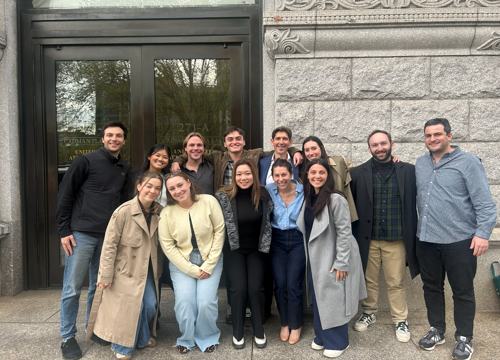
Mediation Clinic Practices Finding Alternatives to Litigation
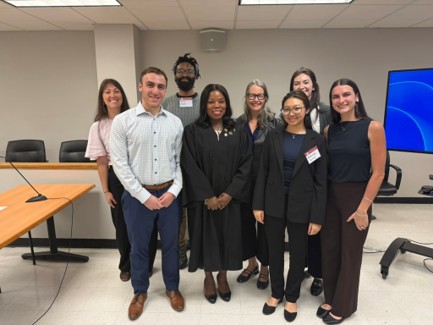
HELP Clinic Students Investigate and Write Reports on Elder Cases
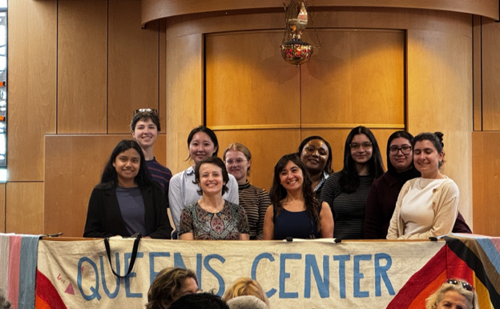
The Helping Elders Through Litigation and Policy (HELP) Clinic students had an exciting semester at each of its partnering agencies, which for the first time included Brooklyn's Legal Aid Society.
On top of their placements, each student completed their Court Evaluator Certification, investigated an assigned case, and wrote a report that centered on making a recommendation to the presiding judge about the capacity of the older adult they were assigned to. The students also participated in the clinic’s annual outreach initiative at the Queens Center for Gay Seniors, where they assisted older adults with executing advance directives, including health care proxy, power of attorney, living wills, and disposition of remains.
Safe Harbor Wins Safety for Domestic Violence Survivor
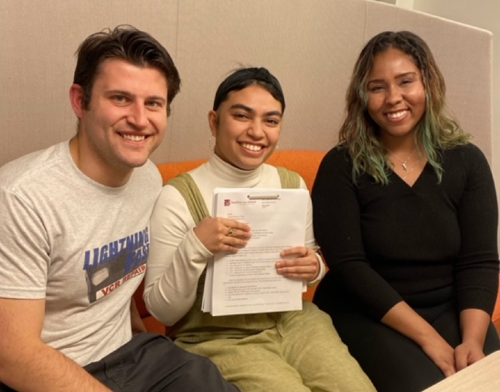
Ms. K, whose green card application is now being processed by the agency, is the mother of two U.S. citizens and suffered decades of domestic violence at the hands of her U.S. citizen spouse. As part of that abuse, Ms. K’s spouse refused to petition for her immigration status and threatened to report her to ICE.
In addition, a client of the Safe Harbor Project applied for a U visa for crime victims in 2017. After an almost 10-year delay, he was finally granted this visa. This spring, clinic student Vanessa Calderon ’26 responded to a last-step request for additional information. Only a few weeks later, the application was granted. With this legal status, he can join his family of U.S. citizens and live safely in these unsettled times.
NYC Council Legislation and Policy Clinic Students Dive into Legislation, Policymaking
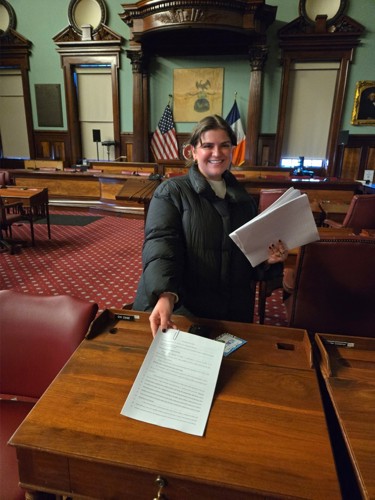
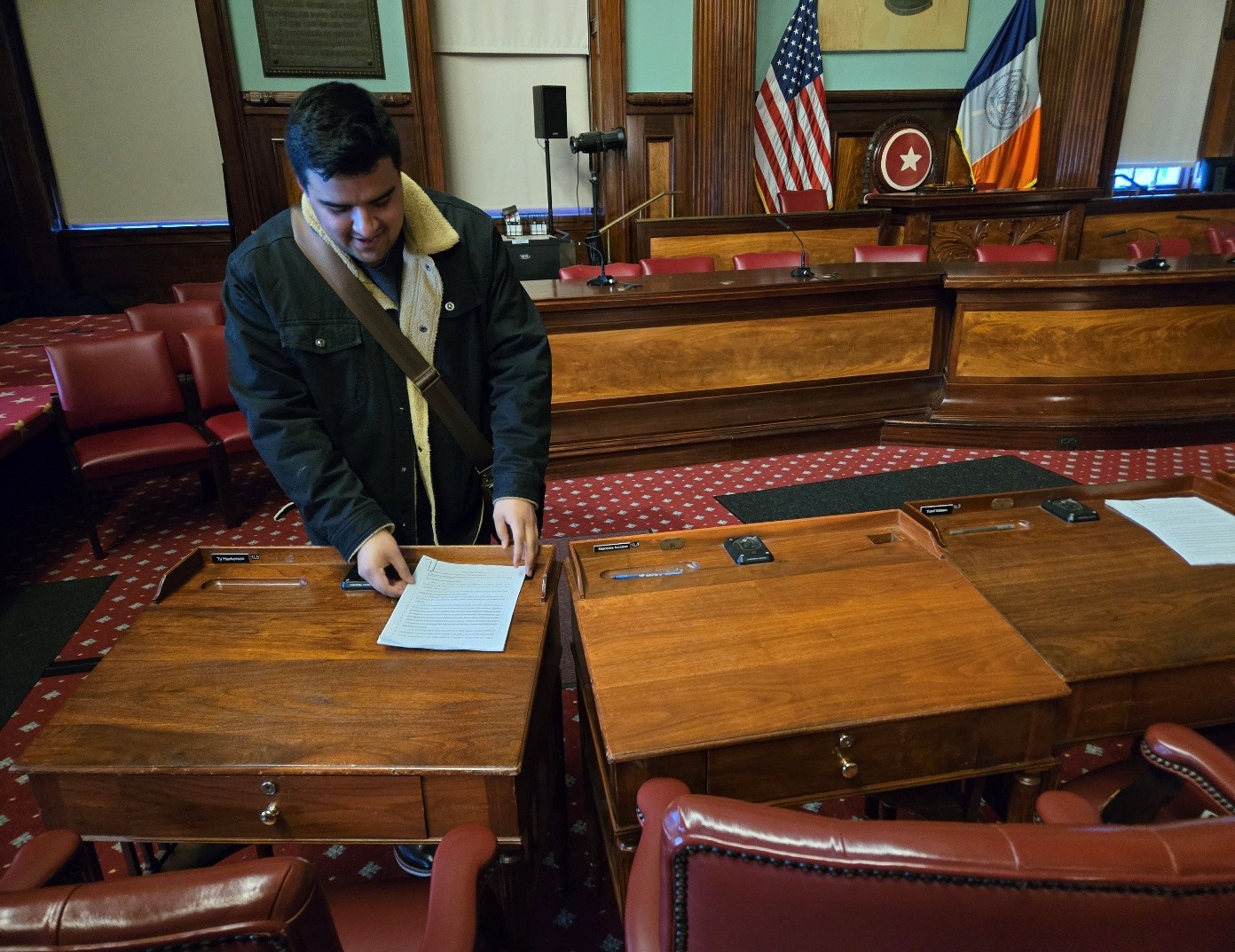
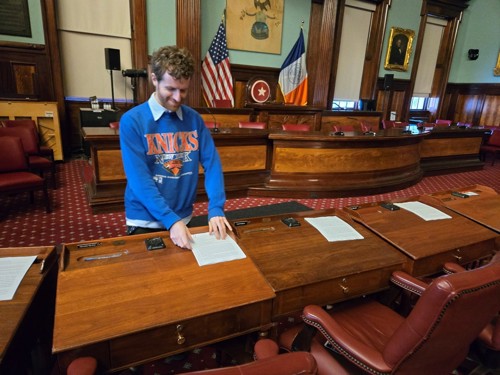
Under New York State law, legislation must be in a final form and upon the desks of City Council Members prior to a vote - a rarely observed process known as “bill aging.” Below, three clinic students 1. Maia Reeb ’27, 2. Dario Arroyo ’27, and 3. Oliver Tell ’26 assist in the aging of bills in the Council Chambers of City Hall).
 2.
3. 
The New York City Council Legislation and Policy Clinic has both a seminar and fieldwork component, both of which are designed to directly engage clinic students in the legislative work of the New York City Council.
Students learn to draft legislation, conduct legal and policy research, and get an up-close look at the actual structure and processes of a legislature. The seminars teach the basic skills that a legislative counsel needs to know and demystify the larger legislative process. Discussions cover everything from professional skills, such as how to achieve clarity in bill drafting, to ethical questions around the roles of professional staff, to examining the utility of stakeholders and lobbyists in policymaking.
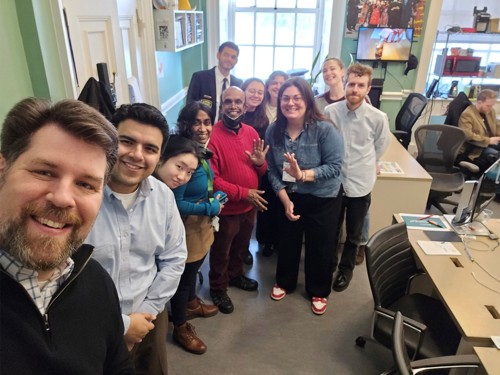
The Spring 2026 clinic was a whirlwind of activity, with an excellent and very engaged group of clinic students. Each student had a unique experience, as they were placed across the five main units of the City Council's Legislative Division, but they also shared some combined experiences, including the opportunity to tour City Hall and the chance to conduct a mock hearing. A particular highlight for the students was an informal discussion with the City Council's Chief of Staff Miguelina Camilo on her work, her career, and the City Council itself. While each council member has their own chief of staff, the Speaker's chief of staff serves the entire Council by overseeing its day-to-day operations and supervising the hundreds of people who comprise its professional staff. Camilo is the first woman and Latina to serve in this role and has previously served as both counsel to the speaker of the New York State Assembly and as a commissioner of the New York City Board of Elections. Each year of the clinic is slightly different, but having the opportunity to learn about city government and the legislative process while being mentored by subject matter experts remains the core benefit to students from year to year.
4.
Housing Justice Clinic Students Advocate for Tenants
This year in the Housing Justice Clinic, student attorneys continued their impactful advocacy on behalf of tenants in Brooklyn, successfully advocating for and securing over $20,000 in rent arrears grants for clients.
This achievement brings the running total of grants received on behalf of tenants by students in the Clinic to over $180,000. Students also negotiated a rent abatement of more than 50 percent for a tenant facing significant repair issues and attained ongoing rental assistance for a senior-citizen client. Student attorneys represented New York City Housing Authority (NYCHA) residents in proceedings at the Red Hook Community Justice Center, building on the Clinic's longstanding presence in that forum.
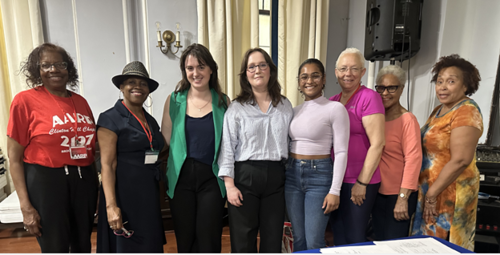
Students engaged in impactful community education projects, providing trainings to community members at Clinton Hill AARP and the Urban Homesteading Assistance Board (UHAB) on estate planning and deed-theft prevention. The Clinic also co-hosted panels on tenant protections and deed theft, furthering public awareness of critical housing justice issues affecting New York City residents.
The Clinic also engaged in policy advocacy, drafting testimony to the New York City Rent Guidelines Board advocating for a rent freeze on behalf of tenants citywide.
The Community Development & Movement Infrastructure Clinic (CD-MIC): Defending and Supporting the Growth of Resilient Grassroots Institutions
Defending Community and Movement Infrastructure
As the federal government has launched investigations and lawsuits against nonprofit organizations, from universities and museums to the American Civil Liberties Union and Southern Poverty Law Center, a majority of the CD-MIC’s clients this year were small, community-based nonprofits seeking help managing their compliance obligations and advice on how to avoid being targeted by the federal government for their charitable, educational, or religious activities.
The CD-MIC advised a racial justice nonprofit on tax compliance, helped a Native American nonprofit restore its 501(c)(3) status after its revocation, counseled a mutual aid group on the legal risks of helping people who cannot afford necessary medication, helped a historic Black church understand its compliance responsibilities, and helped the board of a food cooperative understand the New York statutory requirements for membership votes.
One larger, compliance-focused initiative was done in partnership with the Community Violence Legal Network and Policy Ground Consulting (Dan Hafetz), with support from the Skadden Fellowship Foundation. Students worked with Life Camp—a community violence intervention group in Jamaica, Queens, which has dramatically reduced gun violence not through policing and prosecution, but through direct community intervention, de-escalation, mediation, and healing strategies. As part of this project, students in the CD-MIC, along with its partners, conducted a broad review of Life Camp’s activities, employment and fiscal policies, staff training, and other obligations. The clinic plans to continue this collaboration by bringing a compliance tool it developed alongside partners for Life Camp to other community violence intervention groups.
Supporting the Growth of Resilient Grassroots Institutions in Challenging Times
In turbulent times, resilient communities and movements commonly rise to meet the challenges they confront. As the government cracked down on immigrant neighborhoods, the CD-MIC provided legal support to mutual aid groups providing food and direct aid to vulnerable community members. As the government became increasingly hostile to trans people, the CD-MIC provided legal support to two new projects supporting trans communities. And as antisemitism and homophobia are once again spreading, the CD-MIC supported the founding of a new Brooklyn synagogue catering to Jewish LGBTQ+ families.
 One important project students worked on to help grow new grassroots institutions was representing the Cooperative Community of New West Jackson, a project based in an 8-block span of community-owned land in Mississippi. Students helped the group through a visioning process and created a legal plan to preserve the community’s role in managing the land, minimize property taxes, provide affordable housing to community residents, and protect the community from gentrification. Students developed a sophisticated hybrid structure that combines an agricultural cooperative, nonprofit community land trust, and a series of LLCs to help the group plan for the future. In collaboration with local counsel and Law for Black Lives, and with possible future CD-MIC support, this structure is already being created, helping to set the CCNWJ on a path to do still more in Jackson.
BLIP Clinic Zeroes in on AI-Related Ventures
The Brooklyn Law Incubator & Policy (BLIP) Clinic served dozens of clients this past semester, with an increasing focus on AI-related ventures. BLIP itself has also been figuring out mechanisms to deploy AI within its own law practice, so that BLIP graduates are better prepared to practice law in the AI-disrupted world.
While primarily focusing on day-to-day legal support for socially virtuous, bootstrapped entrepreneurs, BLIP students also prepared public-facing documents to advance law and society in the digital age.
Among the more compelling recent projects are efforts to establish new corporate structures, including integrating AI capabilities into large decentralized autonomous organizations (“DAOs”), and bringing to New York State the concept of a statutorily recognized Artistic Corporation or “A-Corp,” a new type of legal entity whose structure would empower artists to better control their intellectual property, their equity, and their contracting power. BLIP also continued to work on creating a women’s health data co-op to enable women to better harness and limit the unwanted use of their personal data. Also of note, several BLIP students penned an article for the Bloomberg Law - Before the Bar section on “How to Make the Bar Exam Safer” https://news-emails.bindg.com/v1/newsletter/0000019c-6bb6-d103-a1be-7bbfb2f70000?product=LFNW&utm_source=newsletter&item=listen-button®ion=header. BLIP students also submitted comments to the Federal Courts on how to amend the Federal Rules of Evidence to incorporate AI-related evidence in Court proceedings.
https://www.regulations.gov/comment/USC-RULES-EV-2025-0034-0072.